No products in the cart.

How to Choose the Right Activewear for Every Workout
Whether you’re hitting the gym, going for a morning run, practicing yoga, or training outdoors, the right activewear can make


Volleyball jerseys fail on fit long before they fail on fabric. Players report the same five problems season after season: the hem rides up on a dig, the shoulder binds on the swing, light colours show sweat, the neckline fights the strap, and the numbers do not meet the rulebook. Custom volleyball jerseys start at $19.99 in 2026. This guide fixes each complaint with a specific measurement, fabric weight or elastane ratio, then maps specifications to level of play.
| Complaint | Root Cause | Specification Fix |
| Hem rides up on every dig | Body length 2 inches too short for the torso | Add 2 to 3 inches of length over a standard tee |
| Shoulder binds on the swing | Insufficient armhole depth and no shoulder stretch | Raglan or extended armhole, 12 to 15 percent elastane |
| Sweat shows through | Light fabric below 140 GSM in a pale colour | 150 to 165 GSM, or mid-tone colour on the torso |
| Neckline fights the bra strap | Wide scoop or racerback cut on a fitted shirt | Standard crew or narrow V, bound neck |
| Officials flag the numbers | Numerals undersized or low contrast | 4 inches front, 6 inches back, contrasting colour |
Volleyball is the only indoor team sport where players routinely extend fully horizontal. A jersey cut to standard tee length lifts clear of the waistband on every platform pass. Add 2 to 3 inches to body length over the player’s normal shirt, or specify a drop-tail hem that sits lower at the back. Verify against measured length rather than assumed size on our size chart.
The volleyball swing takes the shoulder through a wider arc than any other team sport motion. Two construction choices solve it. A raglan sleeve moves the seam away from the shoulder point entirely. A set-in sleeve with an extended armhole and 12 to 15 percent elastane achieves the same range with a more traditional look. Below 8 percent elastane, hitters report binding within one season as the fabric loses recovery.
Pale jerseys below 140 GSM go translucent under indoor gym conditions. Three fixes work. Move to 150 to 165 GSM. Place a mid-tone or patterned panel across the torso where saturation concentrates. Choose a knit with a tighter face rather than an open mesh across the chest. Fabric weight and opacity characteristics are listed on our fabric types page.
Fitted volleyball cuts often use a wide scoop or racerback that leaves straps exposed and shifting. A standard crew or narrow V with a bound neck edge solves it without changing the silhouette. Bound edges also resist the stretch-out that raw-edge necklines develop after 20 washes.
Most United States high school and club rulebooks require numerals of at least 4 inches on the front and 6 inches on the back, in a colour that contrasts the jersey body. Many also restrict the number set to 1 through 99 with no duplicates and no leading zeros. Confirm the current rulebook before approving artwork, because a non-compliant set is a reprint rather than a warning.
| Fit | Chest Ease | Elastane | Suits | Trade-Off |
| Fitted | 0 to 1 inch | 12 to 18 percent | Competitive club and college-track players | Unforgiving on sizing errors |
| Semi-fitted | 2 to 3 inches | 8 to 12 percent | High school and most club teams | Slight excess at the waist |
| Loose | 4 to 6 inches | 0 to 6 percent | Youth, rec and mixed adult leagues | Catches on the net and on dives |
| Sleeveless | Varies | 10 to 15 percent | Warm gyms, beach crossover | Restricted in some school leagues |
Semi-fitted covers the widest range of body types on a mixed roster and is the safest default when you cannot measure every player individually.

The libero must wear a jersey that clearly contrasts the rest of the squad. Under sublimation the contrast jersey costs the same per unit as the standard set, because colour is printed rather than dyed into stock fabric. Order two libero jerseys rather than one, since the position plays nearly every rally and the shirt cycles through the wash faster than any other. Colour contrast choices are covered in our guide on team colours in sports performance.
| Condition | Effect on the Jersey | Specification Response |
| Winter gym air, recirculated heating | Humidity rises, fabric saturates and clings | 150 to 165 GSM with mesh side panels |
| Tournament format, 4 to 6 matches a day | No drying window between matches | Two jerseys per player minimum |
| Hardwood floor contact | Abrasion at hip, forearm and shoulder | Flatlock seams, 160 GSM or heavier |
| Weekly hot-cycle laundering | Vinyl numerals lift at the edges | Sublimated numbering, which cannot peel |
| Bright gym lighting on pale kit | Show-through becomes visible | Mid-tone torso panel or heavier knit |
| Level | GSM | Elastane | Fit | Jerseys Per Player | Budget |
| Youth rec, 10 to 14 matches | 140 to 150 | 6 to 8 percent | Loose | 1 | $20 to $26 |
| Middle school | 145 to 155 | 8 to 10 percent | Semi-fitted | 1 | $22 to $28 |
| High school | 150 to 165 | 10 to 14 percent | Semi-fitted | 2, home and away | $46 to $62 |
| Club and travel | 155 to 170 | 12 to 18 percent | Fitted | 2 plus libero set | $58 to $84 |
| Adult league | 145 to 160 | 8 to 12 percent | Semi-fitted | 1 | $21 to $30 |
Sublimation prints every one of these configurations at the same unit rate, including the libero contrast and any number set. Method detail sits on our printing methods page, and finished team sets are shown in our customer gallery.
| Line Item | Budget 135 GSM, 6 Percent Elastane | Specified 158 GSM, 14 Percent Elastane |
| Initial 14 jerseys | $21 each = $294 | $28 each = $392 |
| Fit-related reorders, season 1 | 4 units = $84 | 1 unit = $28 |
| Recovery loss, seasons 2 to 3 | Full set replaced = $294 | 0 units |
| Libero jerseys, 2 units | $42 | $56 |
| Three-season total | $714 | $476 |
| Cost per player per season | $17.00 | $11.33 |
Low-elastane fabric loses recovery within two seasons and the whole set has to go. The specified option costs a third less across three seasons. Teams reordering annually should keep the art file on file through our repeat order process so replacements match the original set exactly.
Only if you can measure every player. Fitted cuts have no tolerance for estimation, and custom garments are non-returnable unless defective, as set out in our return and refund policy.
Yes, provided the armhole is bound rather than raw-edged. Check league rules first, since some school associations restrict sleeveless play.
They were applied as vinyl rather than sublimated. Vinyl sits on the surface and lifts under hot washing. Sublimated numerals sit inside the fibre and cannot crack.
More than 4 inches over a standard tee. Excess length catches on the net during blocks and gets tucked, which defeats the purpose.
Fit solves four of the five complaints and fabric solves the fifth. Set body length to the torso, elastane to the swing, GSM to the gym, and numbering to the rulebook. Design direction for the finished look sits in our guide on designing a jersey that represents your team. Compare cuts across our volleyball jerseys range, then send your roster measurements and rulebook through the contact page for a free mockup and a compliance check.
Whether you’re hitting the gym, going for a morning run, practicing yoga, or training outdoors, the right activewear can make
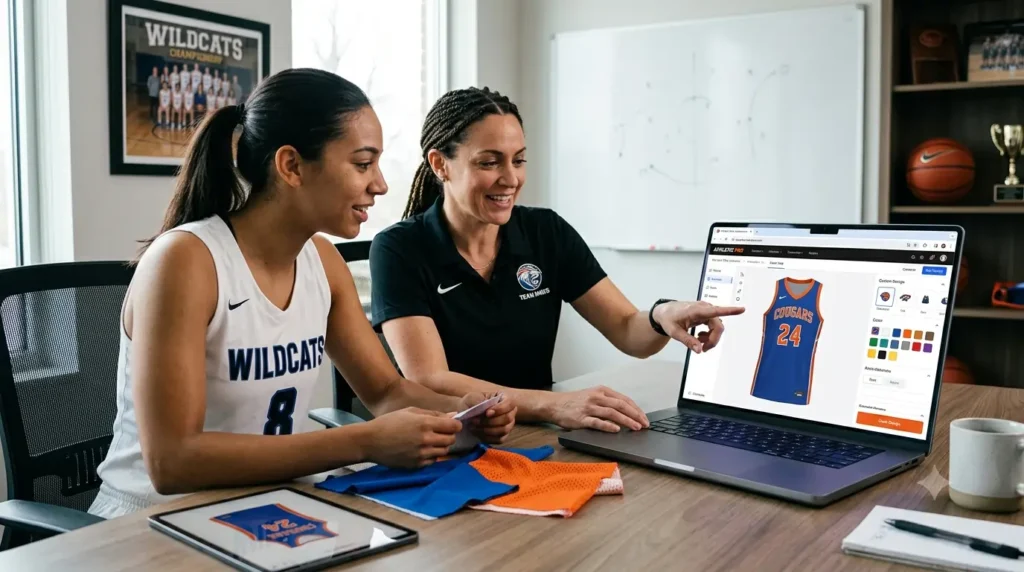
Athletes sometimes face severe overheating and restricted mobility during intense tournament games because of heavy, non-breathable athletic clothing. Selecting court
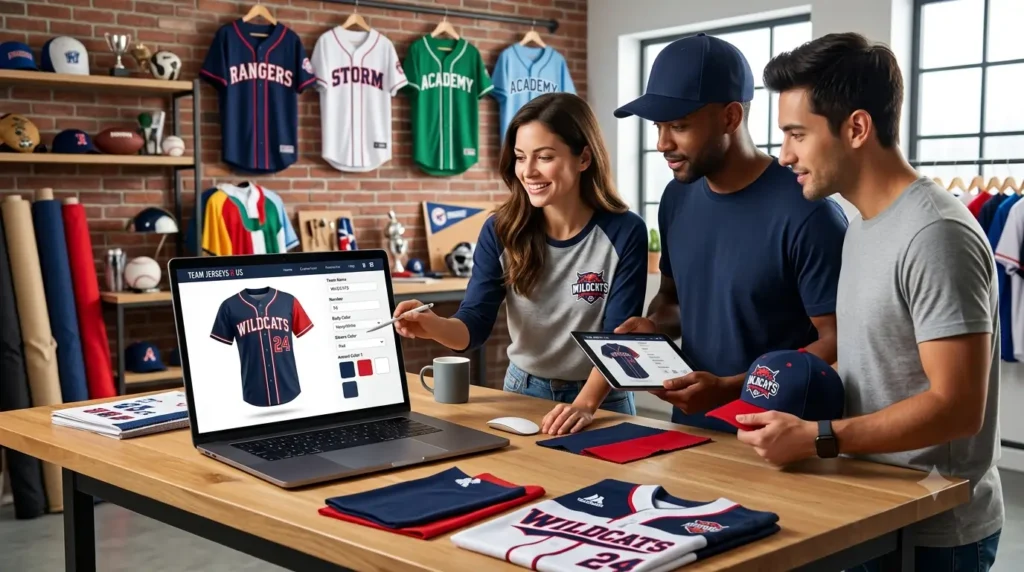
Ballplayers frequently experience severe fabric friction and restricted shoulder rotation because of poorly tailored workout clothing. Selecting team uniforms requires