No products in the cart.
How to Choose the Right Activewear for Every Workout
Whether you’re hitting the gym, going for a morning run, practicing yoga, or training outdoors, the right activewear can make


Sublimation, DTF and embroidery are not competing versions of the same process. Sublimation dyes the fibre. DTF bonds a film to the surface. Embroidery stitches thread through the cloth. Each behaves differently under sweat, heat and repeated washing, and each has a fabric it cannot work on. This comparison sets out the physics, the durability numbers, the break-even quantities and a placement matrix that tells you which method belongs on which part of the garment.
Sublimation converts solid dye into gas under heat at roughly 400F, and the gas bonds inside polyester fibres. No layer sits on top of the cloth. The garment keeps its original hand feel, stretch and breathability, and the print cannot crack or peel because there is nothing to lift. Sublimation only works on polyester or polyester-dominant blends, and only on light base colours, since the process adds dye rather than covering it.
DTF prints a design onto PET film, coats it with adhesive powder, cures it and heat-presses it onto the garment. The result is a flexible surface layer. DTF prints on almost any fabric including cotton, blends and dark colours, which is its main advantage. The trade-off is a film layer that blocks airflow across the printed area and degrades under repeated high-heat washing.
Embroidery stitches thread through the fabric from a digitized file. It produces physical depth, resists abrasion better than any print, and reads as premium. It also adds weight, restricts stretch across the stitched area, and cannot reproduce gradients or photographic detail. Small text below 5mm blurs. Full method detail sits on our printing methods page.
| Attribute | Sublimation | DTF | Embroidery |
| Where colour sits | Inside the fibre | Film layer on the surface | Thread through the cloth |
| Fabric compatibility | Polyester 65 percent and above | Cotton, polyester, blends | Most woven and knit fabrics |
| Dark garment capability | No | Yes | Yes |
| Full-body graphics | Yes, edge to edge | Limited by transfer size | No |
| Gradients and photos | Excellent | Very good | Not possible |
| Breathability at print area | Unchanged | Reduced | Reduced at stitch block |
| Added weight | None | Minimal | 15 to 40 grams per crest |
| Stretch retention | Full | Partial | None at the stitched area |
| Setup cost | None | None to low | $40 to $95 digitizing |
| Cost per jersey | $6 to $14 | $4 to $11 per placement | $7 to $18 per crest |
Laboratory wash tests understate team conditions. Rosters wash on hot cycles, tumble dry on high, and turn garments around inside 24 hours. The figures below reflect that pattern.
| Method | Hot Wash Cycles Before Visible Degradation | First Failure Mode | Repairable? |
| Sublimation | 60 to 80, limited by fabric not print | Fabric pilling and thinning | No, replace garment |
| DTF | 25 to 45 | Edge lift, then cracking across flex zones | Partially, re-press small lifts |
| Embroidery | 80 to 120 | Thread abrasion and backing puckering | Yes, restitch |
Embroidery outlasts both prints on the decorated area, but the surrounding fabric usually fails first. Sublimation is effectively permanent for the life of the garment. DTF is the shortest-lived option on a jersey that plays a full season.
| Base Fabric | Sublimation | DTF | Embroidery |
| 100 percent polyester interlock | Best choice | Works | Works with backing |
| Polyester mesh | Best choice | Poor, adhesive fills holes | Poor, distorts |
| Poly spandex, 12 percent elastane | Best choice | Cracks under stretch | Not recommended |
| Cotton or cotton-rich blend | Not possible | Best choice | Works well |
| Dark navy or black polyester | Not possible | Best choice | Works well |
| Heavyweight baseball twill | Works | Works | Best choice |
Fabric decides the method more often than preference does. Confirm your base cloth on our fabric types page before selecting decoration.
Setup cost is what separates these methods at low volume. Sublimation carries none, so a run of one prices like a run of fifty. Embroidery carries digitization, so unit economics only makes sense above a threshold.
| Order Size | Sublimation, Full Body | DTF, Two Placements | Embroidery, One Crest |
| 1 jersey | $19 | $21 | $62 |
| 5 jerseys | $19 each | $20 each | $29 each |
| 12 jerseys | $19 each | $19 each | $23 each |
| 30 jerseys | $18 each | $18 each | $20 each |
Embroidery reaches parity around 25 to 30 units. Below twelve units it is the most expensive option by a wide margin, which is why no-minimum suppliers build their offer on sublimation. Volume pricing across methods is quoted through our bulk orders desk.

Most strong uniforms mix methods rather than committing to one.
| Element | Recommended Method | Reason |
| Full-body team pattern | Sublimation | Edge-to-edge coverage with no added weight |
| Player numbers, front and back | Sublimation | Cannot peel at high-flex torso zones |
| Player names | Sublimation | Zero per-name cost, unlimited characters |
| Sponsor logo on a cotton fan tee | DTF | Only method that prints cotton and darks |
| Club crest on a polo or jacket | Embroidery | Depth and abrasion resistance where it is seen |
| Cap logo | Embroidery | Structured panel supports stitching |
| Baseball chest wordmark | Twill or embroidery | Traditional look expected in the sport |
A common build uses sublimation for the jersey, embroidery for staff polos and caps, and DTF for supporter merchandise. See how these choices interact with layout in our guide on name, number or logo personalisation.
| Line | Sublimation | DTF | Embroidery |
| Initial 15 jerseys | $285 | $285 | $345 |
| Graphic failure replacements, seasons 2 and 3 | $0 | $114, 6 units | $0 |
| Repair labour | $0 | $40 | $55 |
| Reorder setup, 3 additions | $57 | $60 | $69 |
| Three-season total | $342 | $499 | $469 |
Sublimation costs roughly 30 percent less than either alternative across three seasons on a polyester jersey. That advantage disappears entirely on cotton or dark garments, where sublimation is not an option.
Laundering practice extends or destroys the value of the decoration you paid for. Team managers who set one washing rule for the whole roster see far fewer mid-season failures.
| Rule | Sublimation | DTF | Embroidery |
| Wash temperature | Up to 104F, cold preferred | Cold only, 86F maximum | Cold to warm |
| Turn inside out | Optional | Required | Required |
| Tumble dry | Low, or hang dry | Avoid entirely | Low |
| Ironing over the graphic | Safe at low heat | Never | Never, press from reverse |
| Fabric softener | Avoid, it coats wicking yarns | Avoid | Acceptable |
Sublimation tolerates the widest handling range, which matters when fifteen families wash their own kit. DTF requires discipline that youth teams rarely maintain, and that gap explains most of its shorter field life.
Not onto black fabric. The workaround is to sublimate the dark colour as part of the design onto white polyester, which produces a black jersey with printed graphics and no surface layer.
Yes across the printed area. On a small chest logo the effect is minor. Across a full-body graphic it is noticeable and reduces airflow where athletes sweat most.
Sublimation for game jerseys, embroidery for coaching and travel apparel. The reasoning is set out in our comparison of stitched vs sublimation.
Baseball splits by tradition. Sublimated jerseys dominate youth and travel ball, while twill and embroidery remain standard at higher levels. Compare cuts in our baseball jerseys range.
Start from the fabric, not the finish. Polyester game kit goes to sublimation. Cotton and dark supporter wear goes to DTF. Caps, polos and outerwear go to embroidery. Build the artwork once and apply it across all three, which our guide on designing a jersey that represents your team walks through. Browse finished examples across the full range or read further specification guides on our blog, then send your artwork to our team through the contact page for a free mockup on the method that fits your fabric.
Whether you’re hitting the gym, going for a morning run, practicing yoga, or training outdoors, the right activewear can make
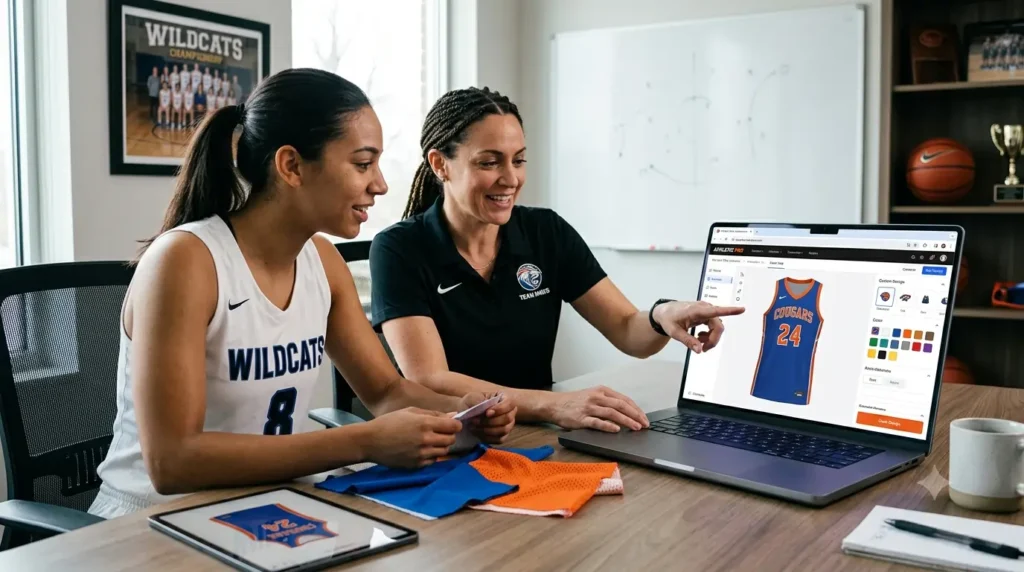
Athletes sometimes face severe overheating and restricted mobility during intense tournament games because of heavy, non-breathable athletic clothing. Selecting court
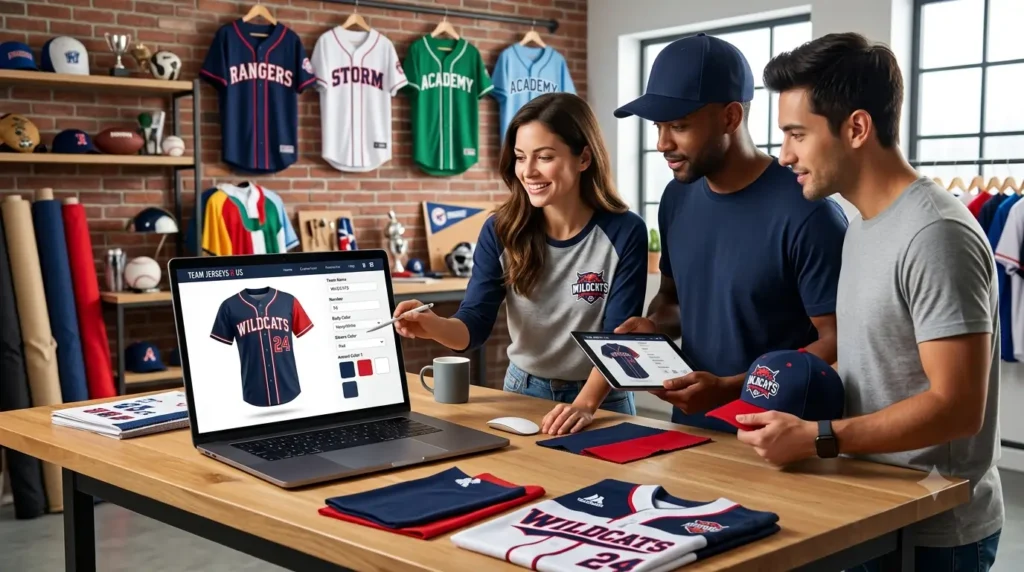
Ballplayers frequently experience severe fabric friction and restricted shoulder rotation because of poorly tailored workout clothing. Selecting team uniforms requires