No products in the cart.
How to Choose the Right Activewear for Every Workout
Whether you’re hitting the gym, going for a morning run, practicing yoga, or training outdoors, the right activewear can make


Baseball has the most traditional uniform culture in American sports. Chest scripts, arched team names and block numbers have looked roughly the same for decades. But the rules behind those numbers and letters differ between Little League, high school and college, and those small differences decide whether a new set of jerseys passes inspection.
This guide covers what each level requires, how to lay out numbers and lettering, and which decoration method holds up best.
Rules change. Confirm with your current league rulebook or state association before approving a design.
| Rule Area | Little League | NFHS (High School) | NCAA (College) |
| Back number | Required on all players | Required; at least 8 inches tall | Required; at least 6 inches tall |
| Number style | Uniforms identical in color, trim and style | Plain Arabic numerals; borders max 1/4 inch | Standard numerals |
| Duplicate numbers | Not allowed | Not allowed | Not allowed |
| Required patch | Official Little League shoulder patch (upper left sleeve or left chest) | Per state association | None league-wide |
| Manufacturer logo | Per league policy | One per item, max 2 1/4 sq in | One per garment, max 2 1/4 sq in |
| American flag | Per league policy | One flag, up to 2 x 3 inches | Allowed per rule |
| Sleeves | Each player’s sleeves roughly equal; no ragged or slit sleeves | Same | Same |
| Pitcher undershirt | Exposed undershirt a solid color | Exposed sleeves not white or gray | Solid color other than white |
NFHS baseball rules require every player to wear a plain number on the back, in a solid color that contrasts with the shirt, at least 8 inches tall. Borders on the number cannot exceed 1/4 inch. No two players on the same team may wear the same number.
NCAA rules require back numbers at least 6 inches tall. That smaller minimum gives college programs more room for names and larger decorative lettering above the number.
Little League Rule 1.11 requires all players on a team to wear numbered uniforms that are identical in color, trim and style. Most local leagues work with back numbers of about 6 inches, but league policies vary, so check your league’s local rules before ordering.
A number that looks right on an Adult XL can swallow a Youth Small. Use this as a starting guide.
| Jersey Size | Suggested Back Number | Suggested Front Number (if used) |
| Youth XS to S | 6 inches | 3 to 4 inches |
| Youth M to L | 6 to 7 inches | 4 inches |
| Youth XL to Adult S | 8 inches | 4 inches |
| Adult M to XL | 8 to 10 inches | 4 to 6 inches |
| Adult 2XL plus | 10 inches | 6 inches |
For high school play, never go below the 8-inch back minimum, even on small jerseys. Our jersey size charts guide helps match body measurements to the right jersey size.
Front lettering is where baseball uniforms get their personality. Rules are lighter here, but good layout still matters.
| Style | Look | Best For |
| Script with tail | Classic, flowing | Traditional programs, high school, college |
| Arched block | Bold, collegiate | Travel ball, rec leagues |
| Straight block | Clean, modern | Youth leagues, sponsor-named teams |
| Left chest logo | Minimal | Practice jerseys, alternates |
Player names are common in high school, college and travel ball. Place names above the number, arched or straight, in letters around 2 to 3 inches tall.
Little League is more cautious. Its appearance guidelines for tournament play state that player names should not appear on the uniform, so many local leagues skip names entirely. Ask your league before adding them.
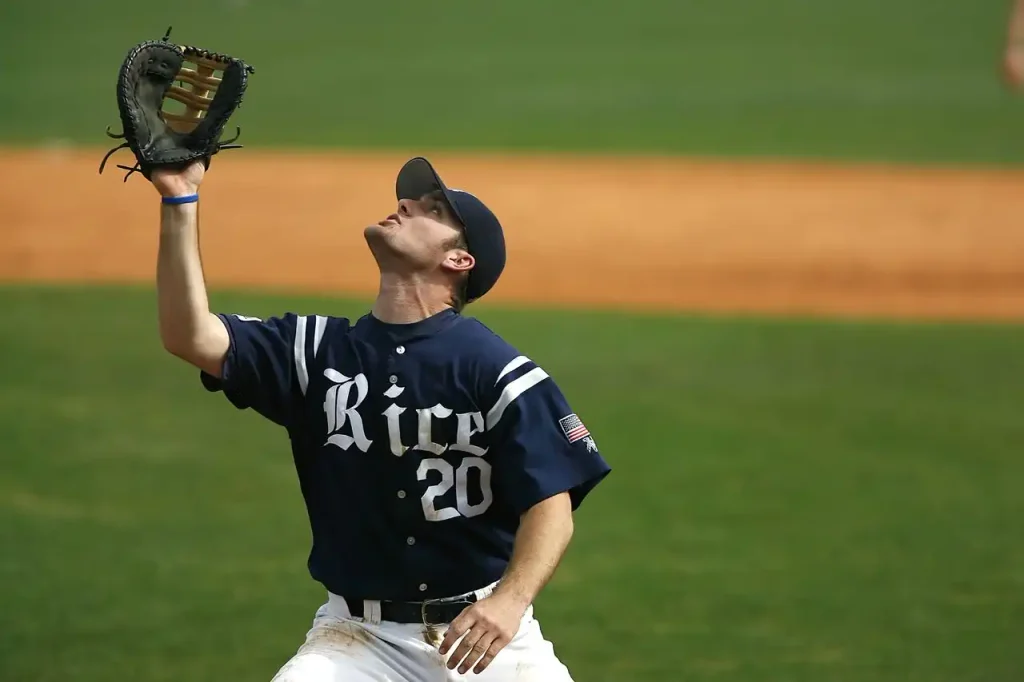
Baseball uniforms slide, dive and get washed weekly. The decoration method decides how long numbers and letters last.
| Method | How It Works | Look | Durability | Cost | Best For |
| Tackle twill | Cut fabric letters stitched on | Premium, raised | Excellent | Highest | High school, college, travel |
| Dye sublimation | Ink dyed into polyester fabric | Flat, full color | Excellent; cannot peel | Moderate | Any level; complex designs |
| Screen printing | Ink printed on the surface | Flat | Good | Low at volume | Rec leagues, practice |
| Heat transfer vinyl | Vinyl pressed onto fabric | Flat, slight sheen | Fair; can peel with heat | Low | Small orders, last-minute adds |
Need a deeper look at print methods? Our comparison of screen printing vs sublimation for team sweatshirts explains how each process bonds to fabric.
Our recommendation: sublimated jerseys with sublimated or tackle twill numbers. Sublimation handles pinstripes, gradients and custom patterns. Tackle twill delivers the classic stitched look.
| Style | Pros | Cons | Typical Use |
| Full button | Classic look, easy on and off | Placket splits front lettering | High school, college, travel |
| Two-button | Hybrid look, fewer buttons to break | Less traditional | Youth and rec |
| Pullover crew or V-neck | Lowest cost, full front for graphics | Less traditional | Little League, rec, practice |
College rules add one detail: glossy or reflective buttons and patterns that imitate the shape of a baseball are not allowed.
All three levels require each player’s sleeves to be roughly the same length, with no ragged, frayed or slit sleeves. Pitchers face stricter rules on visible undershirts:
Rec and travel baseball teams often carry a sponsor name on the front or sleeve. Rules vary by league, and school uniforms generally cannot carry commercial logos. Our guide on how to get team sponsors on your jersey covers placement options that keep numbers clear.
We produce custom baseball jerseys and pants with sublimated designs, tackle twill options and rule-aware number sizing for Little League, high school and college programs.
Browse our custom baseball uniforms or request a baseball uniform quote with your league and roster size.
NFHS high school rules require back numbers at least 8 inches tall. NCAA requires at least 6 inches. Little League requires numbered uniforms, and most leagues use about 6-inch back numbers.
The official Little League shoulder patch goes on the upper left sleeve or the left chest.
Little League’s tournament appearance guidelines state player names should not appear on the uniform. Many local leagues follow the same approach, so check with yours.
Tackle twill and dye sublimation last the longest. Sublimated graphics are dyed into the fabric and cannot peel or crack.
Baseball uniforms reward attention to detail. Hit the right back number size for your level, leave room for patches, keep scripts bold enough to read from the bleachers, and pick a decoration method built for slides and weekly washes. Do that and your uniforms pass inspection and look sharp all season.
Whether you’re hitting the gym, going for a morning run, practicing yoga, or training outdoors, the right activewear can make
Athletes sometimes face severe overheating and restricted mobility during intense tournament games because of heavy, non-breathable athletic clothing. Selecting court
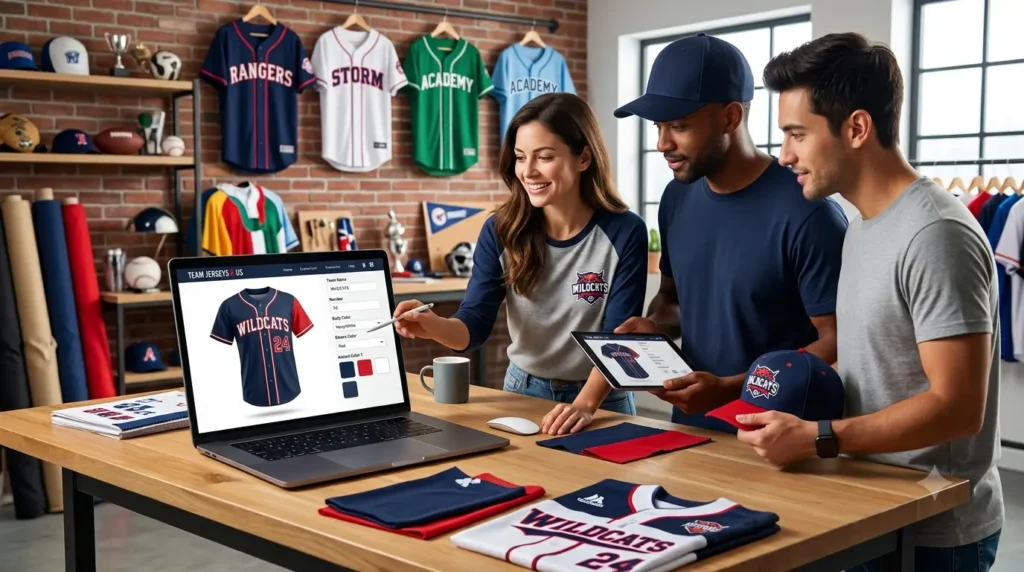
Ballplayers frequently experience severe fabric friction and restricted shoulder rotation because of poorly tailored workout clothing. Selecting team uniforms requires