No products in the cart.
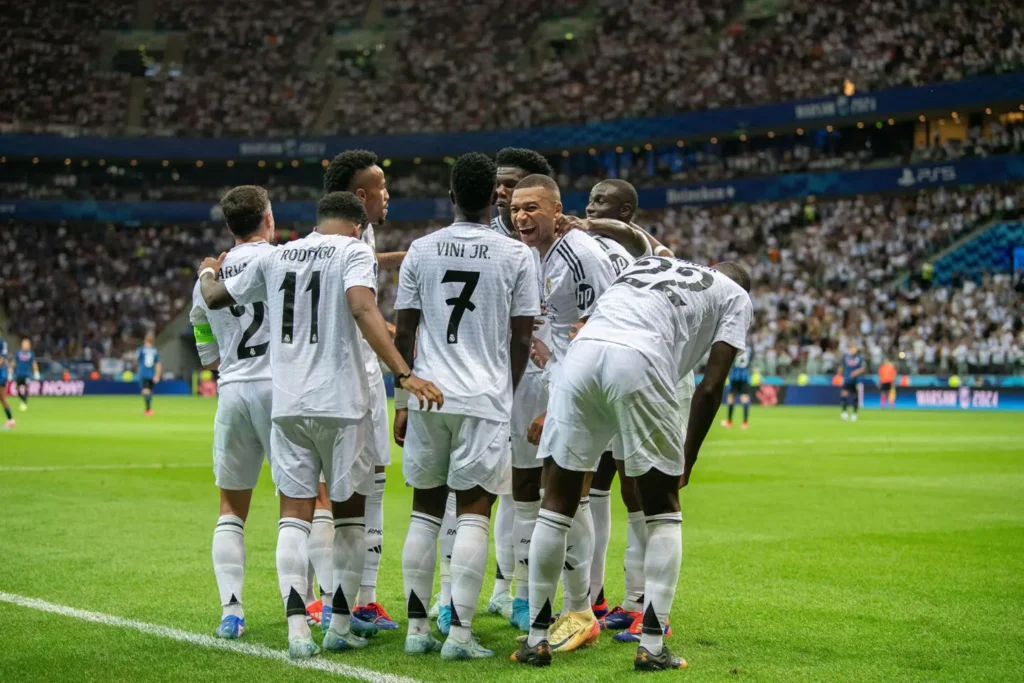
How to Choose the Right Activewear for Every Workout
Whether you’re hitting the gym, going for a morning run, practicing yoga, or training outdoors, the right activewear can make


Most jersey revision rounds trace back to three preventable failures: a logo supplied as a small PNG, a colour described in words rather than a code, and a font nobody has the licence to use. Sending the right assets on the first attempt cuts a four-round proofing cycle to one. This guide lists exactly what to send, in what format, and what happens at production if you send the wrong thing.
| Format | Use | Quality | Notes |
| AI, EPS or SVG | Any size, any placement | Best | Vector, scales without loss |
| PDF, vector-based | Any size | Best | Confirm it is not a scanned image |
| PNG at 300 DPI, transparent | Chest crest, sleeve badge | Acceptable | Must be at least 2000 px on the long edge |
| JPG | Reference only | Poor | No transparency, compression artefacts |
| Screenshot or photo of a logo | Not usable | Unusable | Requires manual redraw |
A chest crest prints at roughly 4 inches wide. A sleeve badge prints at 2.5 inches. A full-back graphic prints at 14 inches or more. One vector file covers all three. A 600 px PNG covers none of them cleanly at the largest size, and the failure shows as soft edges and stepped diagonals on the finished garment.
“Navy”, “royal blue” and “our usual green” are not specifications. Colour must arrive as a code.
| System | Example | Best For | Accuracy on Fabric |
| Pantone Solid Coated | PMS 288 C | Brand-critical team colours | Highest, matched to a physical reference |
| CMYK | 100 / 75 / 0 / 20 | Print-oriented workflows | Good, closest to sublimation output |
| Hex | #0A2A5E | Web and screen-derived brands | Adequate, converts to CMYK for print |
| RGB | 10 / 42 / 94 | Screen only | Adequate, same conversion caveat |
| Verbal description | “Dark blue” | Nothing | Guaranteed revision round |
Screens emit light and fabric reflects it, so a colour that looks correct on a monitor lands differently on polyester. Sublimation output on a lighter base fabric runs slightly deeper than the same value on a heavier knit. Two habits prevent surprises: give a Pantone reference where the colour matters commercially, and judge the proof against a printed reference rather than a phone screen. Fabric behaviour by base cloth is described on our fabric types page, and pairing guidance sits in our guide on choosing the perfect colour scheme.
| What to Send | Why |
| The font name and weight, exactly | “Bebas Neue Bold” is actionable, “a blocky font” is not |
| The font file, where your licence permits sharing | Removes substitution risk entirely |
| Text converted to outlines in the vector file | Guarantees the shape reproduces without the font installed |
| A licensed alternative, if the original is restricted | Avoids a legal problem on a commercial garment |
Two font rules apply specifically to jerseys. Numerals need heavy weights and open counters, because a thin numeral at 8 inches loses legibility from the stands and closed counters fill in visually. Player names need a condensed face when surnames run long, since a 14-character surname at standard width overruns the shoulder seam.
Artwork is only half the submission. The roster file decides whether the set fits.

| Element | Preferred Format | Minimum Acceptable | Failure If Wrong |
| Team crest | Vector AI or SVG | PNG 300 DPI, 2000 px | Soft edges at scale |
| Sponsor logo | Vector from the sponsor | PNG 300 DPI | Sponsor rejects the finished garment |
| Full-back graphic | Vector or 300 DPI at final size | None | Visible pixelation across the largest area |
| Pattern or texture | Vector, or tileable raster at 300 DPI | None | Visible tiling seams |
| Photograph in the design | 300 DPI at final print size | 200 DPI | Soft output, no remedy at press |
| Colour reference | Pantone code | Hex or CMYK | Shade drift between orders |
Method-specific constraints are set out on our printing methods page, and placement rules for names, numbers and logos sit in our guide on personalising your team jersey.
File problems are cheap to fix before production and expensive afterwards. The pattern below is what actually happens when assets arrive incomplete.
| Missing Asset | Immediate Effect | Downstream Cost |
| Vector logo | Redraw or upscale required | 1 to 3 extra days, soft print if unresolved |
| Colour codes | Designer estimates the shade | 1 to 2 extra revision rounds |
| Font name or file | Substitution chosen for you | Rejected proof, reprint if missed |
| Measured sizes | Sizes guessed from shirt labels | Non-returnable garments that do not fit |
| Sponsor artwork from the sponsor | Logo recreated from a website image | Sponsor rejects the finished set |
| League rulebook reference | Numbering set to a default | Full reprint if officials flag it |
Every row above adds days to a three-week ordering window. Assembling the assets properly takes an hour and removes most of that risk.
Usually yes for simple marks. Complex marks with gradients or fine detail take longer and should be requested well before your ordering window opens.
Ask before the work starts and get the answer in writing. Confirm you receive the vector file for future use so you are not tied to one supplier for reorders.
They match when the specification is stored and reordered against the same fabric. That is the mechanism behind our repeat order process.
One to two when the submission is complete. Three or more almost always means colour codes or vector files were missing at the start. Further ordering questions are answered on our FAQ page.
A complete submission is vector artwork, coded colours, named fonts and a measured roster. Send those four things together and the first mockup is usually the last. Design direction sits in our guide on designing a jersey that represents your team, finished examples are in our shop, and background on our production process is on the about page. Send your files through the contact page and we will return a free mockup with any file problems flagged before production.
Whether you’re hitting the gym, going for a morning run, practicing yoga, or training outdoors, the right activewear can make
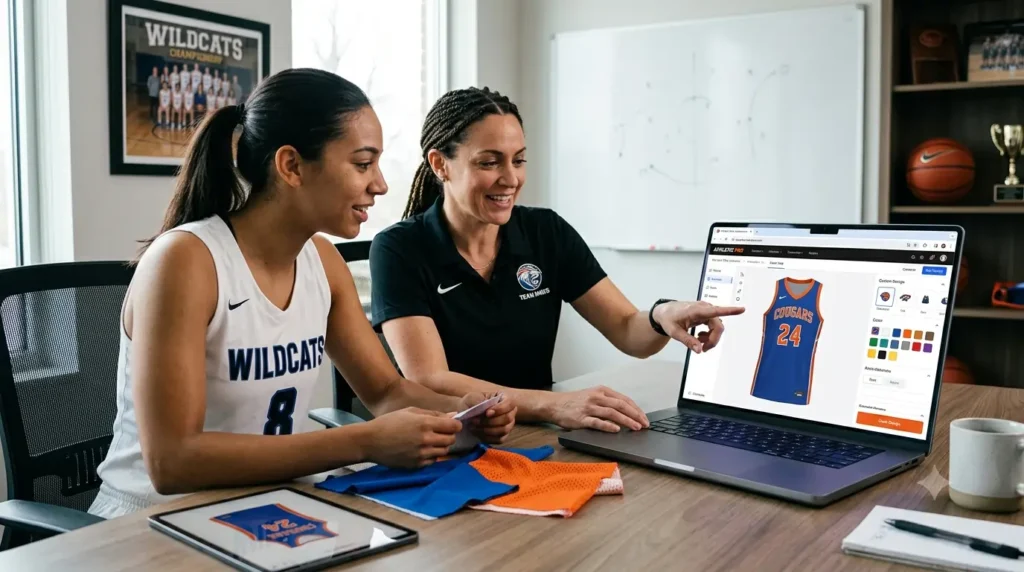
Athletes sometimes face severe overheating and restricted mobility during intense tournament games because of heavy, non-breathable athletic clothing. Selecting court
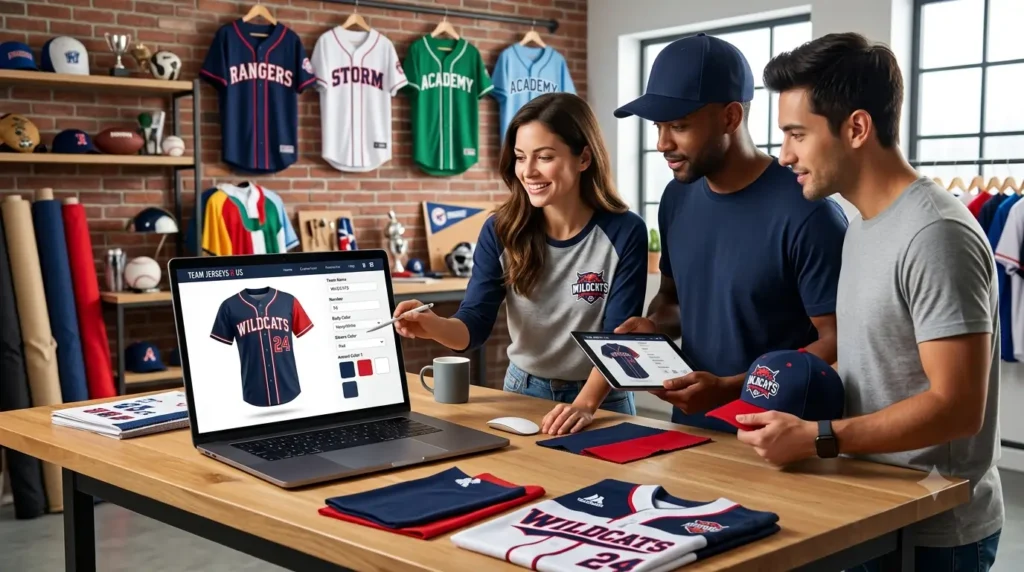
Ballplayers frequently experience severe fabric friction and restricted shoulder rotation because of poorly tailored workout clothing. Selecting team uniforms requires